For the design-minded.
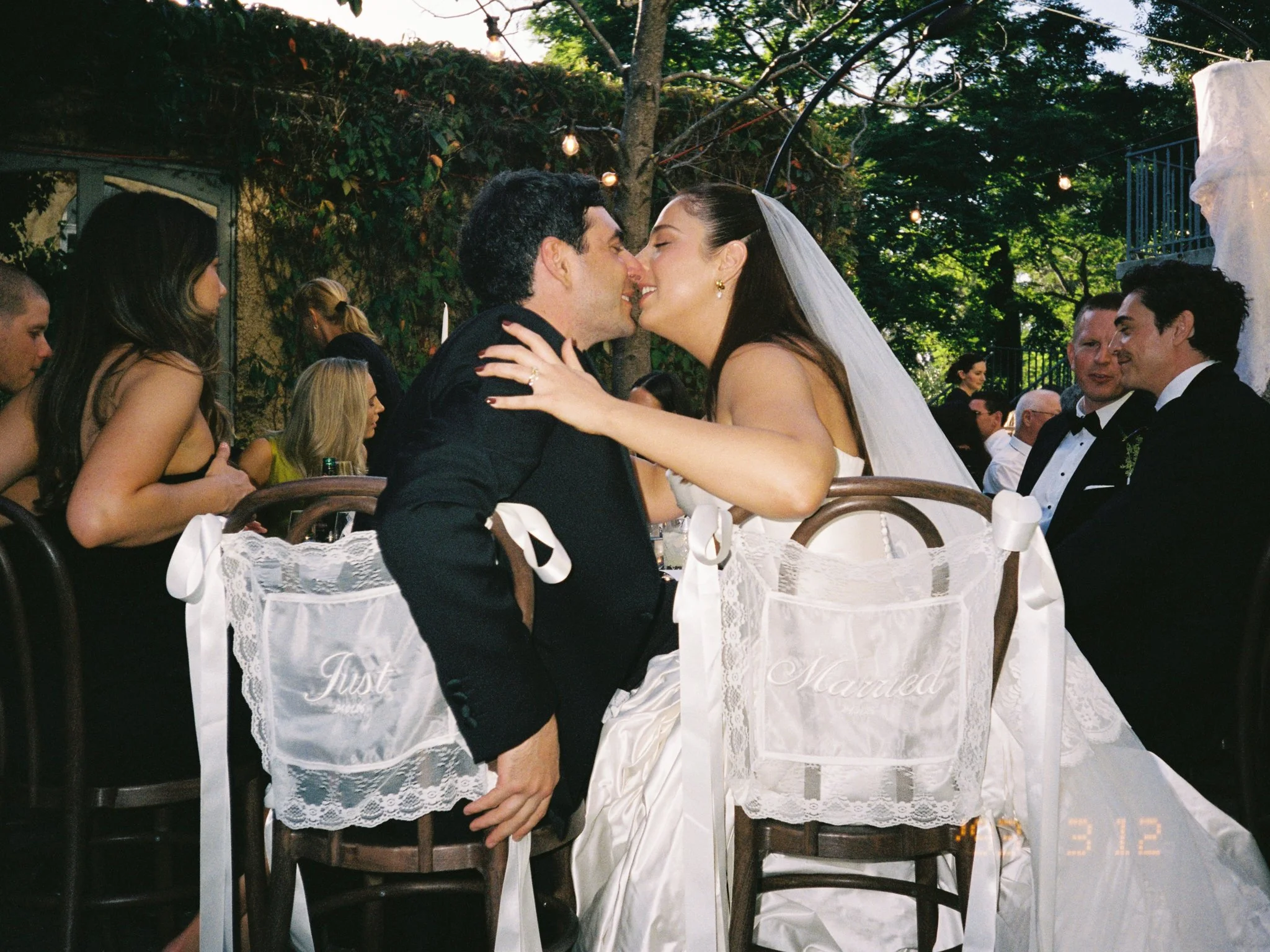
There is a specific kind of magic that only happens when you shoot on real film.
A few Film Things
-
1. Will our film photos look different from digital ones?
Yes, and in the best possible way! Film has that magical “je ne sais quoi” energy. Think soft, natural grain, rich tones, and highlights that bloom gently like they’re glowing from within. It leans into beautiful imperfections, so your images feel less like razor-sharp digital files and more like warm, nostalgic memories you can almost reach into.2. How do you shoot film, and is it different from how you shoot digital?
It’s a completely different rhythm. Digital lets you shoot freely and review instantly, adjusting as you go. Film slows everything down in the best way. Every frame is intentional.
Without a screen to check, the focus shifts entirely to the moment in front of us. Instead of rapid shooting, we wait, observe, and release the shutter right at the peak of emotion. It becomes less about taking photos and more about crafting them.
-
We don’t see them as mistakes, more like little surprises. Film has a charming way of being unpredictable. While we aim for beautifully sharp, well-exposed images, sometimes you get a bit of motion blur, a light leak, or extra moody grain. Those quirks often end up being the frames people fall in love with the most, because they feel honest and alive.
-
Absolutely. When the lights drop, the technical side just gets more interesting. We switch to higher sensitivity film stocks and use direct flash to freeze all the dance floor chaos, laughter, and movement in all its glory.
-
Just 36 chances per roll (for standard 35mm). Compared to a digital card that can hold thousands, film keeps things beautifully limited.
That limitation is actually the magic. Knowing there are only 36 frames makes every click more intentional. You slow down, wait for the right light and emotion to line up, and only then do you press the shutter.
-
Yes, but only briefly, and it’s all part of the rhythm. When a roll finishes, it’s manually rewound, safely stored, and replaced with a fresh one. It takes just a minute or two, and we time these little pauses naturally so they don’t interrupt the flow of the day. In fact, sometimes those few seconds of waiting become part of the moment too.
-
Film is physical, which means there’s a very small element of real-world risk involved. It’s rare, but things like transit issues or lab accidents can happen. We handle every roll with care and work only with trusted labs, but if the unexpected does occur and a roll is lost or unusable, we offer a full refund for the film portion of your package.
-
You’ll receive fully edited, high-resolution scans of all your successful film images, ready for printing, sharing, and everything in between. We don’t keep the negatives ourselves, but if you’d like them, we can connect you directly with the lab so you can arrange to collect them.